Moving Truck Size Calculator: The 3D Method Professional Movers Use
Do you need a 10' or a 26' truck? More answers in here

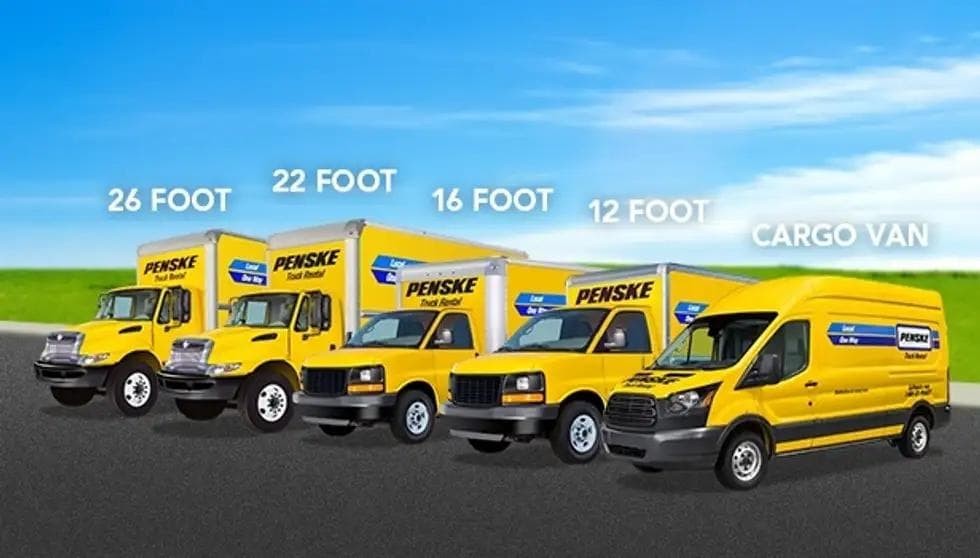
You've measured your apartment, counted your boxes, and consulted the moving company's size guide. Their website says a 2-bedroom apartment needs a 16-foot truck. You book it, confident you've got this figured out.
Moving day arrives. Halfway through loading, you realize with sinking dread: everything isn't going to fit.
Sound familiar? You're not alone. Industry estimates suggest that nearly 30% of DIY movers underestimate their truck size needs, leading to multiple trips, last-minute upgrades at premium rates, or the nightmare scenario of cramming items unsafely just to make it work.
The problem isn't you, it's the method. Those cubic foot estimates and "bedroom count = truck size" formulas moving companies provide? They're oversimplified to the point of being dangerously misleading.
Why Traditional Moving Estimates Fail
Walk into any truck rental location or visit their website, and you'll find some version of this guidance:
- Studio apartment = 10-12' truck
- 1-bedroom apartment = 12-15' truck
- 2-bedroom apartment = 16-18' truck
- 3-bedroom house = 20-22' truck
- 4+ bedroom house = 26' truck
It's clean, simple, and based on rough cubic footage calculations. A 2-bedroom apartment has approximately 400-600 cubic feet of belongings, they reason, and a 16-foot truck has about 800 cubic feet of cargo space. Plenty of room, right?
Wrong. And here's why.
These estimates don't account for:
Ceiling heights. An 800 square foot apartment with 8-foot ceilings has fundamentally different storage needs than the same square footage with 10-foot ceilings. That extra vertical space means taller bookcases, bigger wardrobes, and more overall volume—but the bedroom count stays the same.
Furniture styles and density. A minimalist 2-bedroom with IKEA furniture requires far less space than a traditional 2-bedroom filled with solid wood pieces, an entertainment center, and a dining room set that seats eight.
The Tetris problem. This is the big one. Cubic feet measurements assume you can achieve near-perfect packing efficiency—that your belongings will nestle together like a perfect 3D jigsaw puzzle. In reality, furniture has awkward shapes, fragile items need buffer space, and physics simply doesn't allow you to utilize every cubic inch.
Real-world example: Consider two identical 2-bedroom apartments, both with an estimated 500 cubic feet of belongings:
- Apartment A: Modern furniture, mostly low-profile pieces, lots of uniform boxes
- Apartment B: Antique dresser, oversized sectional sofa, floor lamps, bicycles, framed artwork
Both would get the same "16-foot truck" recommendation. Apartment A might fit comfortably. Apartment B? You're going to need something bigger—or you're making two trips.
The 3D Reality: How Professional Movers Actually Calculate Space
There's an entire industry that can't afford to get load planning wrong: touring and live event production. When a band goes on tour or a production company ships equipment cross-country, every inch of truck space matters. Underestimate, and critical equipment gets left behind. Overestimate, and you've paid for truck space you didn't need.
These professionals don't use cubic foot estimates. They plan everything in three dimensions.
Why? Because Tetris matters. Volume alone tells you almost nothing about whether something will actually fit.
Imagine you have 400 cubic feet of belongings and an 800 cubic foot truck. Sounds perfect, right? But if one of your items is an 8-foot sofa that won't fit through the truck's 6.5-foot door opening without being tilted, or a dresser so heavy it needs to go against the wall for weight distribution, or a lamp so fragile it needs two feet of clearance on all sides... suddenly that 800 cubic feet of "space" becomes 600 cubic feet of usable space.
This is the fundamental difference between theoretical capacity and real-world packing.
The Three Dimensions That Actually Matter
Professional load planners think in three dimensions simultaneously:
1. Item Dimensions (Not Just Volume)
A 40-cubic-foot sofa and 40 cubic feet of boxes are not interchangeable. The sofa is a single rigid object with a specific length, width, and height. The boxes are modular and can fill gaps. This distinction is everything.
When touring professionals plan a truck load, they work with exact measurements: "This road case is 48" x 30" x 36". This speaker cabinet is 24" x 18" x 42"." They don't think in total cubic footage—they think in how these specific shapes fit together.
2. Truck Interior Layout (The Space You Actually Have)
Here's something most people don't realize: a "16-foot truck" doesn't give you a clean 16-foot x 8-foot x 8-foot rectangular space.
Real truck interiors have:
- Wheel well intrusions that eat into floor space
- Irregular heights (the ceiling might be 7'2" at the door but 6'8" over the wheel wells)
- Door height restrictions (you can't always tip items on their side to fit them through)
- Unusable corners and gaps created by the truck's shape
A 16-foot Budget truck, for example, has a cargo area that's technically 16'3" long, but the actual usable floor dimensions are more like 9'8" x 5'7" at the widest point, narrowing in other sections. Those wheel wells? They're about 10-12 inches high, creating permanent obstacles.
3. Packing Efficiency (Why You'll Never Hit 100%)
Even professional movers with decades of experience typically achieve 60-75% packing efficiency. Not because they're bad at their jobs, but because reality imposes constraints:
- Fragile items need buffer space. You can't pack boxes tight against your TV or artwork.
- Weight distribution matters. Heavy items need to be low and against walls, even if that's not the most space-efficient arrangement.
- You need access. If you're making a long-distance move and might need something mid-trip, it can't be buried in the back.
- Stability during transport. Items need to be secured and can't shift, which often means leaving strategic gaps.
When you see those moving company estimates assuming you'll use 80-90% of the truck's cubic footage, they're setting you up for failure.
How to Actually Calculate Your Moving Truck Size
Forget the bedroom-count formulas. Here's the method that professionals use, adapted for your DIY move.
Step 1: Inventory with Real Dimensions
Start with your major furniture pieces. These are the items that will determine your truck size—boxes fill the gaps.
Go through each room and measure:
- Sofas and sectionals (length, depth, height)
- Beds (mattress + frame + headboard dimensions)
- Dressers and wardrobes
- Dining tables and chairs
- Desks and office furniture
- Entertainment centers and TV stands
- Major appliances if you're moving them
Don't just estimate—actually measure. A "queen bed" could be a low-profile platform frame or a traditional setup with a 4-foot-tall headboard. That difference matters.
Common furniture dimensions for reference:
- Queen mattress: 60" x 80" x 12" (but add frame and headboard height)
- Standard sofa: 84" x 36" x 36"
- Sectional sofa: 120" x 90" x 36" (varies widely)
- 6-drawer dresser: 60" x 18" x 32"
- Dining table (seats 6): 72" x 36" x 30"
- Bookshelf: 36" x 12" x 72"
Take photos with a tape measure visible if it helps you keep track.
Step 2: Understand Truck Interior Dimensions
Here's what you're actually working with in common rental truck sizes. Note: these are interior cargo dimensions, not the advertised truck length.
10-12' Truck:
- Cargo space: ~10' L x 5.5' W x 6' H
- Actual capacity: ~400-450 cubic feet
- Best for: Studio or small 1-bedroom, minimal furniture
15-17' Truck:
- Cargo space: ~15' L x 7.5' W x 7' H
- Actual capacity: ~750-850 cubic feet
- Best for: 1-2 bedroom apartment with moderate furniture
20' Truck:
- Cargo space: ~20' L x 7.5' W x 7.5' H
- Actual capacity: ~1,000-1,200 cubic feet
- Best for: 2-3 bedroom home
26' Truck:
- Cargo space: ~26' L x 8' W x 8.5' H
- Actual capacity: ~1,700-1,800 cubic feet
- Best for: 3-4+ bedroom home or furniture-heavy 2-3 bedroom
Critical details most people miss:
The door height is often 6-12 inches shorter than the interior ceiling height. Just because something is 7 feet tall doesn't mean it'll fit through a 6.5-foot door, even if the interior ceiling is 7.5 feet.
Wheel wells. In most trucks, these create a raised platform about 10-14 inches high along both sides, reducing your actual floor space and creating loading obstacles.
Step 3: Account for Packing Reality
Here's the uncomfortable truth: even with perfect planning, you're not going to achieve 100% space utilization. You shouldn't even try.
Use this rule of thumb: Plan for 60-70% packing efficiency.
If a truck has 1,000 cubic feet of cargo space, assume you'll effectively use 600-700 cubic feet of it.
Why so low?
- Mattresses and box springs are bulky and don't stack well with other items
- Fragile items (TVs, mirrors, artwork, lamps) need padding and clearance
- Heavy items (dressers, appliances) must go on the floor against walls for weight distribution
- Odd-shaped items (bikes, plants, floor lamps) create unusable dead space around them
- Boxes aren't perfect cubes—they're various sizes and leave gaps
Here's what this looks like in practice:
You have a 16-foot truck with 850 cubic feet of cargo space. At 65% efficiency, you're really working with about 550 cubic feet of usable, practical loading space. That's the number you should compare against your inventory, not the truck's theoretical maximum.
Step 4: Visualize the Load in 3D
This is where most people just guess and hope. Don't.
The professional method is to actually visualize how items will fit together—not just their total volume, but their physical arrangement in the truck.
Simple approach: Sketch it out.
Get a piece of graph paper. Draw the truck bed to scale (each square = 1 foot). Start placing your largest items:
- Mattresses and box springs typically go upright against a wall
- Sofas often need to go in lengthwise, or be tipped on end
- Dressers and appliances go on the floor, against walls
- Dining tables might need to go upside-down on top of other items
- Fill remaining gaps with boxes and smaller items
As you sketch, you'll quickly discover problems. "Wait, if the sofa goes here, the dresser won't fit there." This is exactly what you want to figure out before moving day.
Advanced approach: Use load planning software.
This is what touring professionals, freight companies, and logistics experts use. Software like TruckPacker lets you input exact item dimensions and truck specifications, then shows you a 3D visualization of how everything fits together.
The difference between guessing "I think this all adds up to 600 cubic feet so it should fit in an 850 cubic foot truck" and actually seeing that your oddly-shaped furniture creates packing conflicts that waste 300 cubic feet of space—that difference can save you hundreds of dollars and hours of frustration.
TruckPacker was built by someone who actually packs trucks at 2 AM for touring productions, where there's no room for error. That same precision can apply to your move.
Quick Reference: Adjusted Estimates
If you want a faster (though less precise) estimate, here's the bedroom-count formula with realistic adjustments:
Studio (under 600 sq ft): 10-12' truck
- Add 2-4 feet if: High ceilings, heavy furniture, lots of books
1BR (600-900 sq ft): 12-16' truck
- Add 2-4 feet if: Dining room set, home office, large TV/entertainment center
2BR (900-1300 sq ft): 16-22' truck
- Add 4-6 feet if: Traditional/heavy furniture, multiple TVs, exercise equipment, outdoor furniture
3BR (1300-1800 sq ft): 22-26' truck
- Add to 26' if: Fully furnished basement/garage, workshop tools, large dining set
4BR+ (1800+ sq ft): 26' truck minimum
- Consider: Multiple trips or adding a trailer for large households
Additional factors that mean you should size up:
- High ceilings (10'+): Add 10-20% capacity
- Heavy, traditional furniture: Add 10-15% capacity
- Lots of odd-shaped items (bikes, lamps, artwork, sports equipment): Add 15-20% capacity
- First-time movers/minimal packing experience: Add 20% buffer
- Long-distance move where weight distribution is critical: Add 10% buffer
Common Mistakes That Waste Space (and Cost You Money)
1. Forgetting that boxes add up
People mentally account for their furniture, then completely underestimate how much space their boxes will take. A 2-bedroom apartment typically generates 30-50 boxes minimum. That's 100-200 cubic feet right there—nearly 25% of a 16-foot truck's capacity.
2. Underestimating awkward items
Floor lamps, bicycles, artificial Christmas trees, ironing boards, folding tables—individually small, but collectively these odd-shaped items eat up space disproportionate to their actual volume because nothing stacks around them efficiently.
3. Not accounting for weight distribution
Your heaviest items (dressers, appliances, loaded file cabinets) need to go on the floor, against the walls, over the axles. This isn't optional—it's physics and safety. But it means that the most space-efficient arrangement (stacking heavy things in the middle) isn't available to you.
4. Assuming everything can be rotated or tilted
Many furniture pieces can only be loaded one way. A fully assembled bed frame might be too wide to fit through the door unless it goes in lengthwise. A heavy dresser might be impossible to tilt on its side. Plan for items in their most restrictive orientation.
5. Ignoring access limitations during the trip
If you're moving cross-country and need access to suitcases, essential boxes, or cleaning supplies before you unload, those items can't be packed in the back corner under your mattress. This "access tax" costs you usable space.
6. Measuring the wrong thing
Measuring your apartment's square footage tells you almost nothing about truck size. An 800 sq ft apartment could be minimally furnished or packed to the ceiling with belongings. Focus on what you actually own, not the space you're leaving.
When to Splurge on the Bigger Truck
If you're between sizes, here's when it's worth paying for the next size up:
Upgrading is cheap insurance when:
- You're moving more than 100 miles (multiple trips aren't practical)
- You're renting help by the hour (delays cost real money)
- You have truly irreplaceable items that need extra protection
- It's your first move and you're not confident in your packing skills
- The cost difference is under $50 for the day
You can probably go smaller when:
- You're making a local move and can do two trips if needed
- You're genuinely minimalist with modern, compact furniture
- You have time and patience to pack with maximum efficiency
- You can leave some items behind (donate/sell)
The cost of upgrading from a 16' to a 20' truck is usually $30-60 per day. The cost of making an unplanned second trip—in rental time, gas, and your own labor—is often over $100. Do the math.
The Bottom Line: Shape Matters More Than Volume
Moving companies use cubic foot estimates because they're simple to communicate and work with "average" moves. But your move isn't average—it's specific, with specific furniture in specific dimensions loading into a specific truck.
Volume-based estimates fail because they ignore the fundamental reality of 3D space: a couch isn't liquid. It doesn't flow into every available gap. It's a rigid, oddly-shaped object that creates dead space around it, limiting what else can go nearby.
The professional approach—the one used by tour managers, freight coordinators, and logistics experts—is to think in three dimensions from the start. To visualize actual items in actual space, accounting for actual constraints.
You don't need professional training to do this. You just need to measure your major items, understand your truck's real interior dimensions, and account for realistic packing efficiency.
When you absolutely need to get it right:
For complex moves—long distance, expensive rentals, tight timing, or just the peace of mind of knowing everything will fit—consider using 3D load planning software. TruckPacker lets you plan your load visually, catching problems before moving day. It's the same precision touring professionals use, now accessible for anyone who needs to pack a truck efficiently.
Whether you sketch it on graph paper or model it in software, taking thirty minutes to plan your load in 3D can save you hours of frustration and potentially hundreds of dollars in last-minute truck upgrades or additional trips.
Your belongings are three-dimensional. Your truck is three-dimensional. Plan accordingly.
Stop reading, start packing: log in to Truck Packer and lay out your trailer.

