Why Teams Are Moving to Truck Packer’s Business Tier
Here's why you may need the Business Tier.

At some point, logistics stops being a solo task. Truck Packer started as a tool for individuals. Production managers, engineers, tour managers, and operations leads who just needed a clear answer to one question: will this fit?
For many users, that is still enough.
But the moment more than one person is involved in planning, updating, or executing a load, things start to break down. Not all at once. Quietly. Incrementally. That is why we introduced the Truck Packer Business Tier. It is not about flashy features. It is about reducing friction, avoiding miscommunication, and removing guesswork when logistics becomes a shared responsibility.
The Problem With Single-Seat Logistics
Most logistics issues do not come from poor planning. They come from handoffs. One person builds the pack. Someone else updates the inventory. Another person is on site trying to load the truck. Each of them is working from a slightly different version of the plan.
PDFs go stale.
Screenshots lose context.
Verbal instructions get interpreted instead of followed.
The Business Tier exists to close those gaps.
What the Business Tier Changes
The Business Tier is designed for teams, not individuals. Here is what actually changes when you move up.
Multi-Seat Access
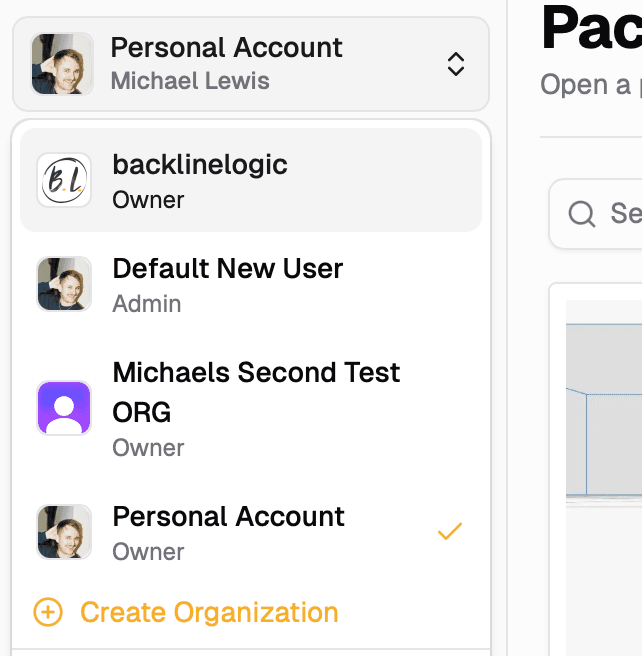
Instead of a single login being passed around or one person acting as the gatekeeper, multiple users can access the same trucks and inventories at the same time.
Everyone sees the same data. Updates happen in real time. There is no need to re-export files or confirm which version is current.
Crew View as a Standard Tool
Crew View was built for people who need clarity, not software training.
With the Business Tier, Crew View becomes part of the workflow rather than a last-minute export:
- Drivers understand load order
- Stagehands know what is buried
- Production managers see constraints before they become problems
This reduces conversations on the dock and speeds up execution.
Operational Consistency
When multiple people plan loads independently, small differences add up:
- Case naming drifts
- Packing philosophy varies by person
- Weight assumptions change depending on who built the plan
The Business Tier helps teams stay aligned through shared templates, consistent truck layouts, and common expectations around weight and priority.
The goal is not rigidity. The goal is predictability.
Who the Business Tier Is For
Not every user needs the Business Tier, and that is intentional. It makes the most sense for teams where logistics decisions are shared or distributed.
Touring Productions
If your tour includes multiple techs advancing shows, rotating crew members, or a mix of fly dates and trucking, a shared source of truth becomes critical. When everyone is looking at the same plan, fewer decisions have to be made under pressure.
Production Companies
Production companies often manage several shows at once, with multiple people touching the same inventory. The Business Tier allows teams to reuse proven truck packs, reduce onboarding time for new staff, and avoid rebuilding layouts that already work.
Logistics and Trucking Partners
When logistics teams can see the intent behind a pack, fewer surprises show up at the dock. Weight distribution questions get answered earlier. Reworks become less common. Disagreements about how a truck was supposed to be loaded largely disappear.
Venues and Install Teams
Venues may not load trucks every day, but when they do, the margin for error is small. Limited dock access, tight labor windows, and fixed schedules mean there is little room for improvisation. Shared planning reduces risk when those moments matter.
This Is Not About Seat Price
Yes, the Business Tier costs more than a single seat.
But the real comparison is not one license versus another. It is the cost of a single mistake:
- An incorrectly loaded truck
- An unexpected labor overage
- A last-minute weight issue
Any one of those easily outweighs the upgrade.
Fewer Decisions on Site
The best truck pack is the one that does not need to be debated during load-in. The Business Tier shifts decisions earlier in the process, during planning and collaboration, rather than on the dock. When load-in starts, the goal is execution, not negotiation.
Final Thought
If you open Truck Packer occasionally to sanity-check a load, the individual tier is likely enough. If Truck Packer is becoming part of how your team operates, how decisions are made, communicated, and carried out, the Business Tier becomes less of an upgrade and more of a foundation.
That is who it is built for.
Stop reading, start packing: log in to Truck Packer and lay out your trailer.

