A Rental Truck Ramp Holds 1,000 Pounds. A Liftgate Holds 3,000, If the Load Is Centered.
Consumer rental trucks come with a 1,000-pound ramp. Commercial ones get a liftgate rated up to 3,000, but only for a centered load: one Waltco gate drops from 3,300 to 1,250 pounds at the tip. Here's how to pick the truck for heavy road cases.

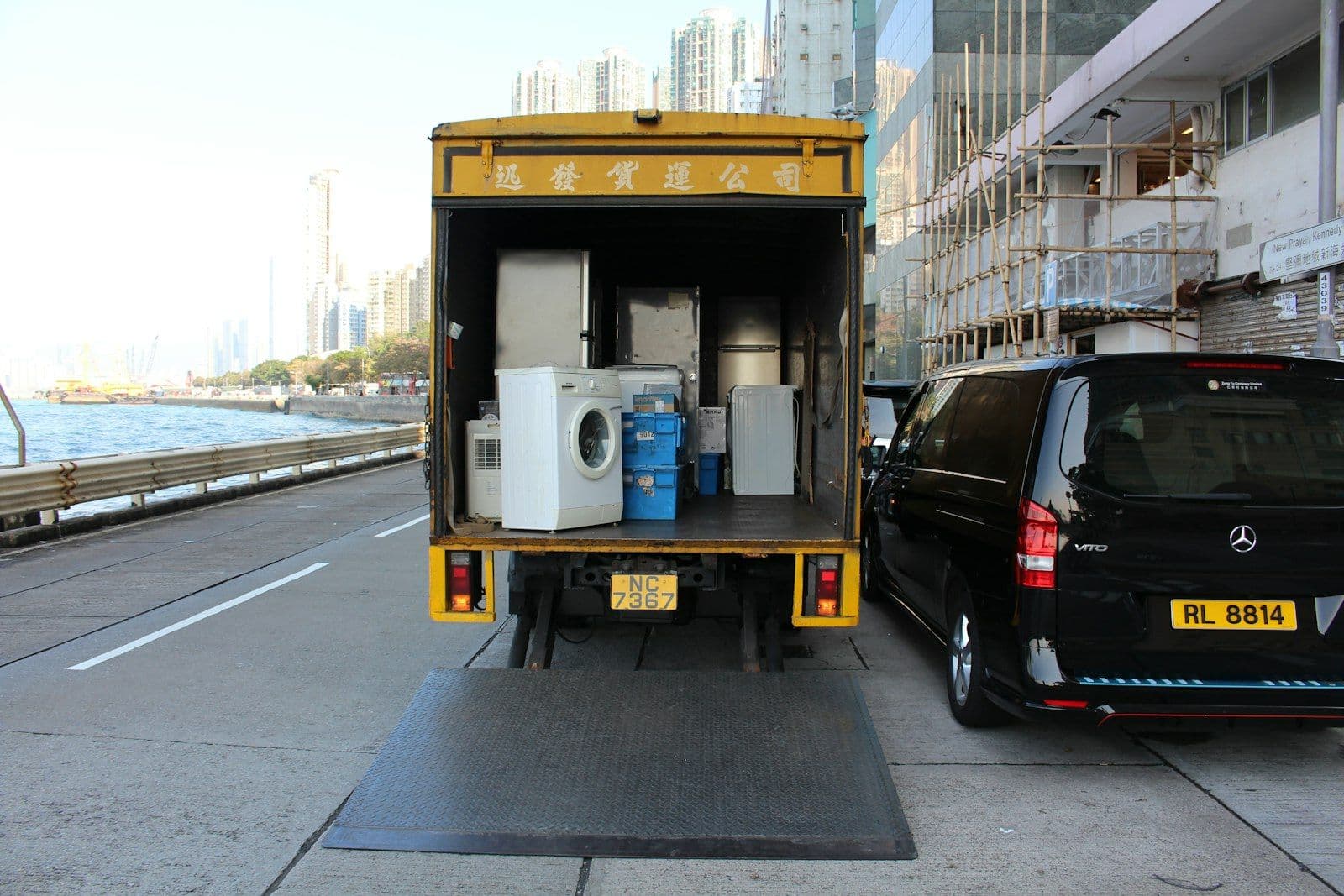
The 26-foot truck you rent for a move comes with a ramp rated for 1,000 pounds. The commercial 26-footer from the same company comes with a liftgate rated for up to 3,000. Both numbers have fine print that matters once the cargo is road cases instead of couches: the ramp rating has to cover the people pushing the case up it, and the liftgate rating assumes the load is centered on the platform. Out at the tip, a gate can carry well under half its sticker.
Here's what the rental companies publish, what the gate manufacturers say the number means, and how it changes which truck you book.
A consumer rental ramp is rated for 1,000 pounds
Source: Penske, 26-foot moving truck
Penske's 26, 22 and 16-foot moving trucks all list a "1,000 lb. capacity loading ramp," and Budget's 26-footer lists the same 1,000 (Budget, 26' truck). U-Haul doesn't publish a ramp rating on its truck pages, but it does publish the width: 31 inches on the 26-footer and 26 inches on the 15 and 20 (U-Haul, 26' truck). That rating is for everything on the ramp at once. A 437-pound console case with two people walking it up is already close to 800, and on a 26-inch ramp the casters on a wide case don't both fit.
A commercial rental liftgate is rated for up to 3,000 pounds
Source: Penske, 22-26 foot commercial box truck
Penske's non-CDL commercial 22 to 26-footer comes with a "liftgate or liftgate/ramp combination that can handle up to 3,000 lb." and a floor height around 46 to 50 inches, compared with a 35-inch deck on the U-Haul 26. Budget's liftgate 26-footer is also rated at 3,000, and its page says it straight: "Lift Gate only Available for Commercial Rentals" (Budget, 26' liftgate truck). Penske's smaller 16 to 18-foot cabover drops to 2,500 (Penske, 16-18 foot cabover), and Enterprise lists a tuck-under gate on its 26-footer without publishing a rating at all (Enterprise, 26' straight truck). If you need the gate, you're booking from the commercial counter.
A 3,300-pound liftgate is a 1,250-pound liftgate at the tip
Source: Waltco BZ liftgate operating manual
Every rental page gives one number and none of them says where on the platform it applies. The manufacturers do. Waltco's BZ-33 is rated at 3,300 pounds "if the load is centered no farther than 30" out from the vehicle rear sill," and its chart steps down from there: 2,300 at 42 inches, 1,800 at 54, 1,450 at 66 and 1,250 at 78. Maxon's Tuk-A-Way decal rates its gate at 2,500 pounds "when the load is centered on the load carrying platform" and says the heaviest part of a load should never sit past the center of the platform, away from the truck (Maxon Tuk-A-Way manual). Waltco's spec tag says the same thing a different way: rated capacity is "based on an evenly distributed load on the platform flat surface" (Waltco WDV manual).
So the sticker is the best case. A heavy amp rack rolled all the way to the outer edge so the next case fits behind it is exactly the load the chart is warning about.
Riding the gate adds 200 pounds and breaks the manual
Source: Heavy Duty Trucking, 10 tips for spec'ing the right liftgate
Riders "can increase weight by 200 pounds or more," which is the polite version. Anthony's operator manual says "Do not ride on the liftgate" and wants wheeled loads "restrained by cart stops, a retention ramp, or fencing" (Anthony operator manual). Waltco's manual adds that "wheeled loads must be properly retained from rolling." Production safety sheets land in the same place. Disney's says to "center the load on the gate, and control it with brakes, wheel chocks, sand bags, or wedges" (Disney, general liftgate safety), and Actsafe's toolbox talk has the most production-specific line of the bunch: "Never leave a liftgate raised halfway and use an apple box as a step" (Actsafe, liftgate safety).
For road cases that means brakes locked on every caster, one case per cycle when it's heavy, centered and close to the truck, and nobody riding it down with the case.
Which truck to book
Start from your heaviest case, not your case count. If the heaviest one plus the people moving it gets anywhere near 1,000 pounds, the consumer ramp truck is the wrong truck, and you want the commercial gate truck even if everything else would fit on the ramp. The same weight list tells you how many gate cycles the load-in takes and which cases go up first, and a road case weighs a lot more tour-ready than empty, so use the loaded number.
That list is already in the pack if the cases carry their weights. Check the heaviest few against the ramp or gate you're booking, and you know before you're at the counter instead of at the dock.
Know your heaviest case before you pick the truck. Log in to Truck Packer and pack it with weights.

