Jake Brakes vs. Exhaust Brakes: What Every Trucker and Shipper Should Know
Jake brakes and exhaust brakes keep 80,000-pound trucks under control on mountain grades. Here's how they work, when to use each, and why your load weight matters more than you think.

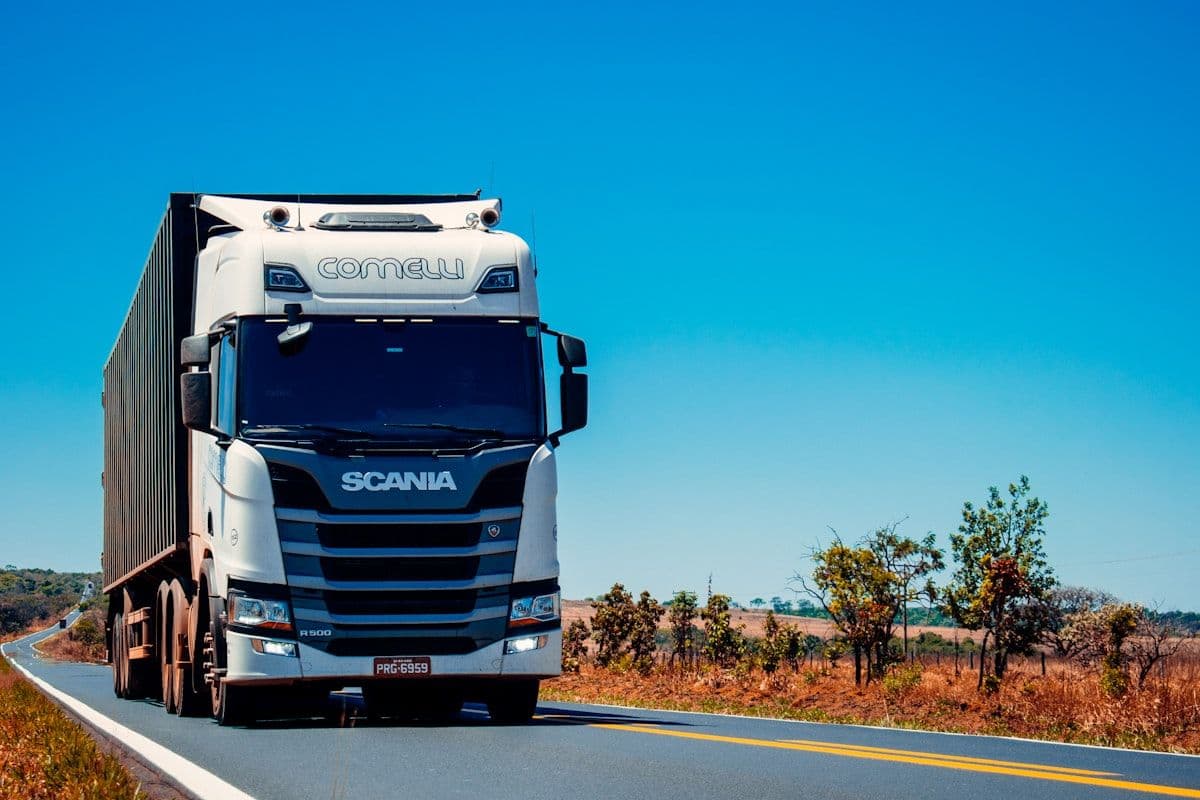
If you have ever driven behind a semi truck descending a mountain pass, you have probably heard it: a rapid, staccato BRRRAP-BRRRAP-BRRRAP that sounds like a diesel-powered machine gun. That is a jake brake doing its job. And for truckers hauling 40 tons of freight down a six-percent grade, it is not optional equipment — it is the difference between a controlled descent and a runaway truck ramp.
Jake brakes and exhaust brakes are two of the most misunderstood systems in commercial trucking. Drivers rely on them daily, municipalities try to ban them, and most shippers have no idea how they affect load planning and vehicle wear. Here is everything you need to know about engine retarders — how they work, when to use them, and why your load weight matters more than you think.
What Is a Jake Brake, Exactly?
A jake brake — formally called a compression release engine brake — is a supplemental braking system built into the engine itself. The name comes from Jacobs Vehicle Systems, the company that invented and patented the technology back in 1961. The term has since become a catch-all for any compression release engine brake, much like "Kleenex" became shorthand for tissue.
Here is the simplified version of how it works: In a normal diesel engine cycle, the piston compresses air in the cylinder, fuel ignites, and the expanding gases push the piston back down — that is your power stroke. A jake brake interrupts this cycle. Just before the piston reaches the top of the compression stroke, the exhaust valve opens and releases all that compressed air. The energy the engine just spent compressing that air is effectively wasted, which creates a massive drag on the drivetrain. Multiply that across six, eight, or sixteen cylinders firing in sequence, and you get serious retarding force — often matching or exceeding the engine's rated horsepower output.
The result: the truck slows down without the driver ever touching the service brakes.
Exhaust Brakes: The Quieter Alternative
An exhaust brake takes a fundamentally different approach. Instead of releasing compressed air through the exhaust valves, it restricts the exhaust flow downstream of the engine using a butterfly valve or sliding gate in the exhaust pipe. This creates backpressure that forces the engine to work harder to push exhaust gases out, which slows the crankshaft and, by extension, the drive wheels.
Exhaust brakes are simpler, cheaper, and — critically — much quieter than jake brakes. They are standard equipment on most medium-duty trucks and common on pickup trucks with diesel engines. The tradeoff is power: an exhaust brake typically delivers 60 to 80 percent of the retarding force of a full compression release brake. For a loaded Class 8 truck descending a long grade, that gap matters.
Jake Brake vs. Exhaust Brake: The Key Differences
Braking Power. A jake brake can produce retarding force roughly equal to the engine's rated horsepower — often 400 to 600 hp on a modern Class 8 engine. An exhaust brake tops out at about 60 to 80 percent of that. For a 78,000-pound combination vehicle on a steep descent, that difference is significant.
Noise. This is the big one. A jake brake operating at full power can exceed 100 decibels — louder than a chainsaw. Exhaust brakes, by comparison, are nearly silent. This is why you see "No Engine Brake" signs near residential areas; they are almost always targeting jake brakes specifically.
Mechanism. A jake brake works by releasing pressure at the top of the compression stroke via the exhaust valves. An exhaust brake works by building backpressure downstream in the exhaust system. One releases energy; the other traps it. Both slow the truck, but through opposite strategies.
Cost and Complexity. Jake brakes require integration with the engine's valve train and are more expensive to install and maintain. Exhaust brakes are a bolt-on system in the exhaust pipe — simpler, cheaper, and easier to service.
Why Brake Fade Should Terrify Every Trucker
Engine retarders exist because of physics. A fully loaded tractor-trailer at 80,000 pounds carries an enormous amount of kinetic energy, and going downhill, gravity constantly adds to it. Service brakes convert kinetic energy into heat through friction. On a long descent, that heat builds relentlessly. Drum temperatures can exceed 500 degrees Fahrenheit. At that point, the brake lining material loses its friction coefficient — a phenomenon called brake fade — and stopping power drops dramatically.
Brake fade is not a gradual warning. It can come on suddenly, and when it does at 70,000 or 80,000 pounds on a six-percent grade, the truck is effectively uncontrollable. Runaway truck ramps exist for exactly this reason. Engine retarders prevent fade by doing the heavy lifting of speed control without generating any heat in the wheel brakes. A driver who uses their jake brake properly on a mountain descent might never touch the brake pedal at all.
Your Load Weight Directly Affects Engine Braking
This is where engine braking intersects with load planning. A jake brake's retarding force is fixed — it is a function of engine displacement and RPM, not vehicle weight. A Cummins X15 at 1,800 RPM produces roughly the same braking horsepower whether the truck is loaded at 45,000 pounds or 80,000 pounds. But the heavier truck has significantly more kinetic energy to dissipate.
That means weight distribution and total load weight directly impact how much the driver depends on service brakes to supplement the engine brake. An efficiently packed truck — where weight is evenly distributed across axles and the total is known accurately — gives drivers and dispatchers better information to plan routes. If you know a load is maxed at 79,500 pounds and the route includes Cabbage Patch on I-70 in Colorado, that changes the conversation about timing, speed, and gear selection.
This is one of the underappreciated benefits of 3D load planning. When you build a load plan in Truck Packer, you get exact weight per item, total trailer weight, and visual confirmation of weight distribution — front to back, side to side. That data is not just useful for DOT compliance and axle limits. It informs how aggressively a driver can rely on engine braking versus service brakes on challenging terrain.
The Regulatory Patchwork: Where You Can and Cannot Jake
Jake brake regulation in the United States is a patchwork of local ordinances, state laws, and practical enforcement realities. Most restrictions happen at the municipal level — towns near interstate exits and highway grades post "No Engine Brake" signs to reduce noise in residential areas. Fines typically range from $50 to $500.
At the state level, Delaware has an outright ban. Connecticut and several other states require mufflers on vehicles equipped with compression release brakes. Vermont is currently debating S.66, a bill that would require muffler systems on all engine-braked trucks, establish a citizen noise reporting system, and impose fines from $250 to $750 for violations. The bill has been controversial, with critics calling it a stealth ban that prioritizes quiet neighborhoods over driver safety.
The safety exception is nearly universal: if using the engine brake is necessary to prevent an accident — brake failure, loss of control, emergency stop — drivers will not be cited. But planning to rely on that exception is not a strategy. Drivers running routes through restricted areas need to account for the reduced braking options when calculating approach speeds and gear selection, especially at gross weights near the 80,000-pound limit.
The Wet Road Problem
Jake brakes have one significant limitation: traction. Because the retarding force is applied through the drivetrain to the drive wheels only, engaging a jake brake on a wet, icy, or gravel surface can cause the drive axle to lose traction and the trailer to jackknife. The FMCSA recommends limiting speed to 25 mph in poor traction conditions and avoiding engine brakes entirely in favor of light, steady service brake application.
Modern trucks mitigate this with multi-stage jake brakes — low, medium, and high settings — and traction control systems that automatically reduce engine brake intensity when wheel slip is detected. But the fundamental risk remains, and experienced drivers know to dial back the jake in rain, snow, or on unfamiliar surfaces.
Practical Advice: When to Use What
Use the jake brake on long descents, heavy loads, and mountain grades where sustained speed control is critical. Engage it early — before the truck gains momentum — and select a gear low enough to keep RPMs in the effective range (typically 1,400 to 1,800 RPM). The jake brake is most effective at higher RPMs; lugging the engine in too high a gear wastes its potential.
Use the exhaust brake for everyday driving, rolling stops, moderate grades, and anywhere engine brake noise restrictions are posted. Many drivers leave the exhaust brake on continuously as a passive speed management tool — it barely affects fuel economy and significantly reduces service brake wear.
Use neither on slick roads, in low-traction conditions, or when the trailer is empty or lightly loaded (the reduced weight on the drive axle makes wheel lockup more likely).
Better Load Data Means Safer Descents
Every decision a driver makes on a mountain grade — what gear to select, when to engage the jake, how much service brake to supplement — depends on knowing exactly how much weight is on the truck and where it is sitting. An overloaded rear axle changes braking dynamics. An unevenly packed trailer shifts the center of gravity. These are not abstract concerns; they are the variables that determine whether a truck rolls into the truck stop at the bottom of the pass or ends up on the evening news.
3D load planning tools like Truck Packer give you that data before the truck leaves the dock. Accurate item weights, visual weight distribution, and axle load estimates — all from the pull sheet you already have. When your drivers know exactly what they are hauling, they can brake smarter, drive safer, and keep the service brakes cool for when they really need them.
Try Truck Packer free and see how a positioned load plan changes the way you think about every mile of the route — especially the downhill ones.
Stop reading, start packing: log in to Truck Packer and lay out your trailer.

