Payload by Truck Size: The Weight Limits That Cap Your Load Before the Walls Do
Cubic feet tell you if the gear fits. Payload tells you if the truck can legally move it. Real weight limits from cargo vans to 53-foot dry vans, the CDL line at 26,000 pounds, and why weight is the number carriers are repricing around this summer.

Every truck sizing guide, including ours, spends its time on floor length, interior width, and cubic feet. Those numbers tell you whether the gear fits. They do not tell you whether the truck is allowed to move it. Every truck has a second ceiling: payload, the weight it can legally carry. And with production gear, the scale usually wins the argument before the walls do.
That ceiling matters more right now than it has in years, because weight is the number the freight industry is actively repricing around.
Weight is suddenly the expensive number
Carriers are watching shipment weight climb and charging accordingly. ArcBest reported a 5 percent jump in weight per shipment in May, and the rate increases have followed fast: ABF Freight raised rates 5.9 percent on June 22, and Saia pushed a 7.1 percent general rate increase on July 6. Behind it all, truckload capacity keeps shrinking under the federal CDL enforcement push, and C.H. Robinson's July update has spot rates trending sharply higher year over year.
Translation: every pound you ship is getting more expensive, and every truck you can avoid booking is real money. Knowing your payload limits is how you avoid discovering them at a weigh station.
The payload ladder, size by size
Cargo vans. The spread between vans is bigger on payload than on floor space. A 2026 Ford Transit tops out around 4,085 pounds and a Ram ProMaster at 4,820, while a Sprinter can be configured up to 6,735 pounds. If your trailer-less club run carries amps, a small PA, and a backline of tube heads, the Transit can weigh out while it still looks half empty.
16-foot box truck. Penske's 16-footer gives you about 800 cubic feet of box but only 4,300 pounds of payload. That is less payload per cubic foot than the vans. Fill it with cable trunks and motor cases and you will hit the limit with visible floor left over.
26-foot box truck. This is where the licensing line hides. The standard 26-footer is rated at 26,000 pounds GVW, the maximum you can drive without a CDL, and carries about 10,000 pounds of payload. The CDL-required version of the same box jumps to 33,000 GVW and roughly 17,000 pounds of payload. Same truck length, 70 percent more carrying capacity, one license class apart.
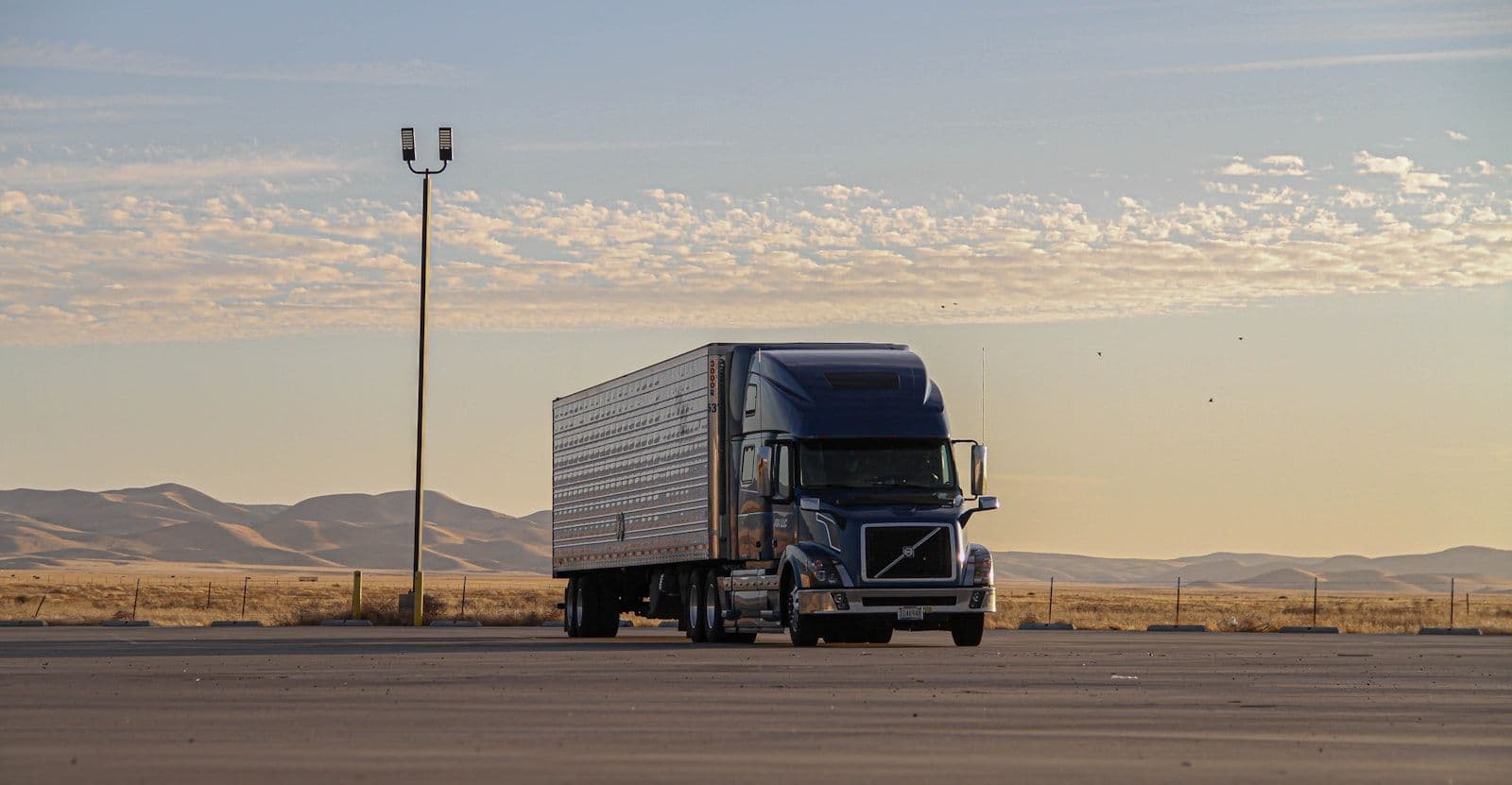
53-foot dry van. The federal gross limit for the whole combination (tractor, trailer, and cargo) is 80,000 pounds, which in practice leaves 42,000 to 45,000 pounds of usable payload after the equipment's own weight. A 53-footer holds around 4,000 cubic feet, so dense freight weighs out long before it cubes out.
The wrinkle: it is not one number, it is four
Even under the 80,000-pound gross cap, the load has to sit right. Federal axle rules allow roughly 12,000 pounds on the steer axle and 34,000 on each tandem group. Stack your heaviest cases over the nose of the trailer and you can be overweight on an axle group while the total is perfectly legal. That is a ticket, a re-work at the scale, or both.
Production freight is exactly the kind that trips this. Chain motors, steel, ballast, and loaded cable trunks are dense and tend to get loaded first, which means they pile up in one end of the box.
Plan the weight like you plan the floor
The fix is the same discipline you already apply to floor space, applied to pounds. Put a real weight on every case, not just the big ones. Watch the running total as the pack builds. And pay attention to where the heavy items land along the length of the truck, not just whether they fit.
This is a thing 3D load planning is quietly good at: Truck Packer tracks the loaded weight of the pack as you build it, so you know whether the show weighs out before anyone signs a trucking contract. In a summer where every carrier is repricing around weight, that number deserves the same attention as the walls.
Put it to work: log in to Truck Packer and build your load plan.

