Truck Packer vs Cargo Planner: Which Load Planning Software is Right for You?
Let's dive into what's the right software for you!

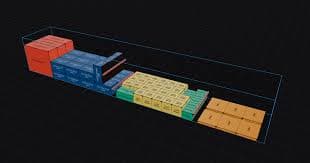
Truck Packer vs Cargo Planner: Which Load Planning Software is Right for You?
Choosing the best truck loading software depends on your industry, workflow, and what you're actually trying to optimize. Here's how Truck Packer and Cargo Planner stack up.
If you've searched for load planning software, you've probably come across both Truck Packer and Cargo Planner. While both tools help you optimize cargo space, they serve different audiences and solve different problems.
This comparison breaks down features, pricing, and ideal use cases so you can make the right choice for your operation.
What is Truck Packer?
Truck Packer is load planning software built specifically for touring professionals, AV rental companies, production vendors, and logistics teams who need to visualize and optimize loads without a steep learning curve. Despite the name, it handles any container type—trucks, trailers, shipping containers, warehouse bays, or custom dimensions.
Key Features
Auto-Pack Solver Upload your inventory via CSV or enter dimensions manually, hit one button, and Truck Packer generates multiple optimized load configurations. No guesswork, no manual Tetris.
Intuitive 3D Design Space The interface was designed for people who aren't 3D software experts. Click and drag cases to adjust. Switch between orthographic (2D-style) and perspective (realistic) views depending on what you need.
Grouping Have a stack of cases that always travel together? Group them so the solver keeps them as a unit. This is huge for touring where certain road cases are pre-configured.
Real-Time Weight Management A color-gradient overlay shows weight distribution across the load. You'll see instantly if you're over axle limits or total weight restrictions—before you load the truck.
Flexible Subscriptions At $21–$28/month, Truck Packer costs a fraction of enterprise load planning tools. Plus, touring is seasonal—you can pause your subscription when you're off the road and reactivate when needed. Your inventory and saved packs stay on their servers.
API Access For teams building custom workflows, Truck Packer offers API access to integrate load planning into your existing systems.
Multi-Truck Support (Coming Soon) Plan multiple trucks in a single workspace—see how your entire fleet loads out at once. This feature is currently in development.
Who Should Use Truck Packer?
- Tour managers and production coordinators planning truck packs for live events
- AV rental companies optimizing delivery trucks
- Moving companies who want visual load plans for crews
- Anyone who needs quick, visual truck packs without CAD experience
What is Cargo Planner?
Cargo Planner is a web-based load planning tool focused on freight optimization for containers, trailers, and pallets. It's designed for logistics operations that deal with high-volume shipping and need to maximize container utilization.
Key Features
Multi-Container Optimization Cargo Planner can calculate how to distribute cargo across multiple separate container spaces—useful for freight operations trying to minimize the total number of containers needed for a shipment. Note: this is optimization across multiple spaces, not visualizing multiple containers in a single packing view.
Custom Container Configurations Create custom container types with specific measurements, axle setups, and wall configurations. Supports standard containers, flat racks, open tops, flatbed trailers, and PMCs (airline containers).
Excel Import Upload packing lists from Excel and generate load plans in seconds. Ideal for operations already managing inventory in spreadsheets.
API & SDK For enterprise users, Cargo Planner offers an API and SDK to embed interactive 3D views directly into your own applications.
Oversized Cargo The software handles oversized loads on specialized equipment like flat racks and open-top containers.
Who Should Use Cargo Planner?
- Freight forwarders optimizing container shipments
- Warehouses and 3PLs planning outbound loads
- Shipping companies working with ocean and air cargo
- Enterprise logistics teams needing API integration
Head-to-Head: Key Differences
1. Target Industry
Truck Packer was built for the live events and touring world, but handles any container type. The interface prioritizes speed and simplicity—road cases, groupings, quick adjustments between shows. At $21–$28/month, it's also attractive to smaller logistics operations that don't need enterprise complexity.
Cargo Planner targets traditional freight and logistics. It speaks the language of containers, pallets, and shipping lanes, with pricing to match ($59–$99/month).
Bottom line: If you're loading trucks for tours, events, or AV deliveries, Truck Packer will feel more intuitive. If you're a smaller operation that wants solid load planning without enterprise pricing, Truck Packer is worth a look. For large-scale international freight where you need to calculate cargo distribution across multiple separate containers, Cargo Planner is built for that.
2. User Experience
Truck Packer emphasizes simplicity. The company explicitly states that "no drafting or 3D experience required"—you can feel like a pro user within minutes. The drag-and-drop interface and one-click auto-pack make it accessible to anyone on the crew.
Cargo Planner is user-friendly but has more depth (and complexity) due to its broader feature set. The Excel import workflow assumes users are comfortable with spreadsheet-based inventory management.
Bottom line: If you need to hand this tool to a crew member who's never used load planning software, Truck Packer has virtually zero learning curve.
3. Weight Distribution
Both platforms handle weight, but differently.
Truck Packer shows a real-time color gradient overlay that visualizes weight distribution across the entire load. It's visual and immediate—you see problem areas at a glance.
Cargo Planner calculates axle weights and supports custom axle configurations for different trailer types. It's more technical but powerful for freight compliance.
Bottom line: Truck Packer's visual approach is faster for quick decisions. Cargo Planner's approach is more detailed for DOT compliance documentation.
4. Pricing & Flexibility
Truck Packer starts at $21–$28/month—roughly a third the cost of Cargo Planner. Add in the ability to pause and reactivate for seasonal users, and the savings stack up fast.
Cargo Planner starts at $59/month for Lite, $99/month for Standard, with Enterprise pricing available. These are traditional monthly subscriptions with no pause option.
Bottom line: Truck Packer is significantly cheaper. For a touring company using the software 6 months per year, you're looking at ~$150 vs ~$350–$600 annually. That's real money back in your pocket.
5. Integration & API
Both platforms offer API access for custom integrations.
Cargo Planner provides an SDK and API for embedding 3D visualizations directly into enterprise software—useful for large logistics operations with custom TMS/WMS systems.
Truck Packer offers API access for teams building workflows around their load planning process, at a fraction of the cost.
Bottom line: Both support integration. If you need deep 3D embedding in enterprise software, Cargo Planner's SDK is more mature. If you need API access without the enterprise price tag, Truck Packer delivers.
Which Should You Choose?
Choose Truck Packer if:
- You want professional load planning at 60-70% less cost ($21–$28 vs $59–$99/month)
- You work in touring, live events, AV, 3PL, or production
- You need quick, visual load plans without training your team on complex software
- You want flexible billing that matches your seasonal schedule
- You want to plan multiple trucks in one workspace (coming soon)
- Weight distribution visualization matters more than detailed compliance reports
- Your team includes non-technical users who need to jump in fast
- You need any container type (trucks, trailers, shipping containers, custom)
Choose Cargo Planner if:
- You work in freight forwarding
- You need SDK access to embed 3D visualizations in enterprise software
The Verdict
There's no universal "best" load planning software—it depends entirely on your workflow and budget.
Cargo Planner is a robust tool for traditional logistics operations dealing with containers, pallets, and freight optimization at scale. Its SDK and multi-space distribution calculations make it ideal for enterprise shipping operations willing to pay $59–$99+/month.
Truck Packer delivers professional load planning at $21–$28/month—roughly 60-70% less than Cargo Planner. It's purpose-built for the live events industry where speed, simplicity, and visual clarity matter most. With multi-truck support coming soon, you'll be able to plan your entire fleet in a single workspace. The pricing makes it attractive for anyone who needs solid load planning without the enterprise price tag.
If you're a tour manager, production coordinator, AV rental company, or just a logistics team tired of overpaying for features you don't use—Truck Packer gives you what you need at a price that makes sense.
Both offer free trials, so the best move is to test each with your actual inventory and see which fits your workflow.
Try Truck Packer Free
Ready to see how Truck Packer handles your truck packs? Start your free trial and experience auto-pack optimization, intuitive 3D visualization, and flexible subscriptions built for the way you actually work.
Last updated: February 2026
Everything above lives in the app. Log in to Truck Packer and start packing.

