Truck Weight Limits Around the World: A 2026 Continental Guide for Freight, Touring, and Cross-Border Logistics
The truck that is perfectly legal in Alberta is overweight in California, overweight again in the UK, and a rolling work of art in Australia. A 2026 continental comparison of road weight limits for freight, touring, and cross-border shippers.

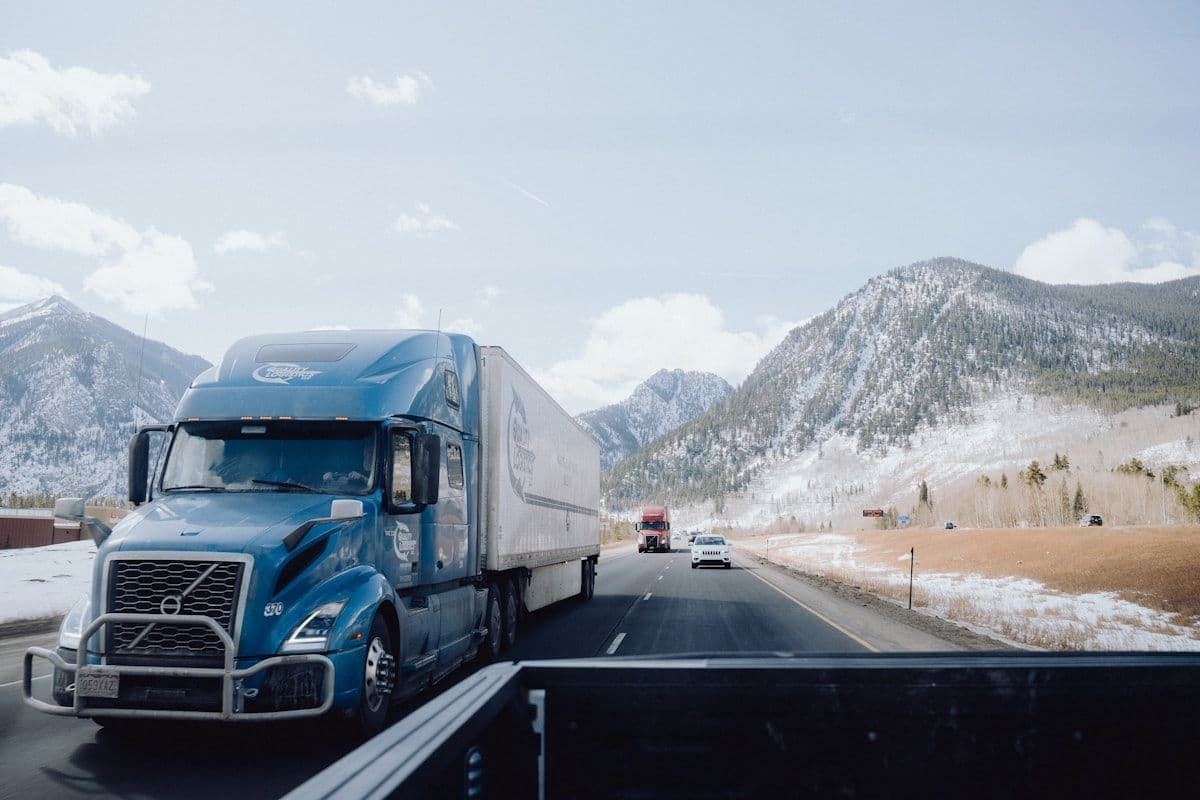
A 53-foot trailer packed to 80,000 lbs is perfectly legal on a US Interstate. Put the exact same load on a UK motorway and it is roughly four tonnes overweight. Move it across the Channel into France and it is still overweight — unless it happens to be carrying a shipping container, in which case the rules flex slightly. Drive it to Alberta and suddenly you are lighter than the provincial B-train limit by almost 30,000 lbs. Ship it to Australia and the truck itself would be considered a toy next to a quad road train.
Road weight limits are one of those parts of logistics where every country — often every province or state — has quietly written its own rulebook, and the numbers diverge far more than most shippers realize. If you have ever tried to move touring production, trade show freight, or oversized cargo across an international border, you already know this lesson the expensive way. If you have not, this post is a shortcut. Here is a 2026 continental guide to how road weight limits actually work around the world, what changed recently, and why the load plan you build matters at least as much as the rate you negotiate.
The United States: 80,000 lbs, the bridge formula, and an outlier in plain sight
The US federal limit most shippers can quote from memory is 80,000 lbs gross vehicle weight on the Interstate system — roughly 36,287 kg. That number has been baked into American logistics since 1982 and it is why a standard five-axle tractor-trailer is what most of the world pictures when it hears "semi-truck." Individual states can (and do) allow higher weights off the Interstate network under permit, and specific corridors like the Western Freeways allow LCVs (longer combination vehicles). But the 80,000 lb number is the default, and anything above it almost always means a permit, a route survey, and an escort fee.
Two other US rules quietly reshape what fits in a truck. The first is the federal bridge formula, which caps axle-group weight based on wheelbase — a way of protecting bridges that means you cannot simply cram 80,000 lbs into a short tandem. The second is the single-axle limit of 20,000 lbs and tandem-axle limit of 34,000 lbs. In practice, this is why short, dense, heavy freight (generators, transformers, steel) hits an axle limit long before it hits the gross vehicle weight, and why spreading load matters more than total weight.
Europe: the 40/44-tonne split and a directive mid-rewrite
Cross the Atlantic and the rulebook changes shape entirely. The EU baseline is 40 tonnes GVW for a standard articulated truck — roughly 88,185 lbs, which on paper is higher than the US, but in a very different truck. Tractors in Europe are cab-over-engine and trailers are shorter (typically 13.6 m / 44.6 ft), because the EU's Weights and Dimensions Directive regulates overall length more strictly than gross weight.
The 40-tonne baseline stretches to 44 tonnes in two common cases: intermodal movements (truck-rail-truck), and 6-axle combinations hauling a 40-foot shipping container. Individual member states diverge from there. The Netherlands allows LZV "ecocombi" combinations up to 25.25 m and 60 tonnes on a designated network; Sweden and Finland run even heavier combinations in the north. A truck that is legal at 60 tonnes in the Netherlands is badly overweight the moment the wheels cross into Germany.
The bigger 2026 story is that the EU is mid-revision on the Directive itself. Trilogue negotiations between the Commission, Parliament, and Council opened in December 2025 on a package that raises the weight allowance for zero-emission vehicles from 42 to 44 tonnes (so a battery-electric tractor's heavier drivetrain does not eat into payload), and clarifies when heavier cross-border LZV-style combinations can operate between neighboring member states. For anyone planning European freight moves in 2026-2027, this is a rulebook in motion — assume the numbers you knew in 2023 are outdated, and check the member-state table before committing to payload.
The United Kingdom, post-Brexit, holds to its own version of the rules: 44 tonnes GVW for a 6-axle articulated HGV, but only if the vehicle is hauling a shipping container or has road-friendly suspension on the drive axle. Five-axle units are capped at 40 tonnes. Enforcement in 2026 has tightened considerably — weigh-in-motion sensors, port inspections, and operator compliance audits are now the baseline, not the exception. Getting caught over on a UK motorway is no longer a "wag the finger" conversation.
Canada: heavier trucks, stricter provinces, and the 63,500 kg B-train
Canadian weight limits are a classic federal-provincial mess that has been partially tidied by an interprovincial MOU. On the interprovincial network, B-trains — a tractor pulling two trailers joined with a fifth-wheel "B" connection — are legal at up to 63,500 kg through British Columbia, Alberta, and Saskatchewan. That is roughly 140,000 lbs, nearly double the US Interstate limit. Ontario's SPIF framework (Safe, Productive and Infrastructure-Friendly) lets specially configured 8-axle trucks run heavier than standard five-axle combinations, with Phase-4 rules fully in effect since 2011 and a new tranche of rule changes coming into force in 2026.
The practical consequence: a Canadian carrier running a B-train from Calgary to Toronto can load significantly more than their US counterpart running the same lane from Denver to Chicago — but the moment that truck crosses the border southbound, it is illegal. Northbound freight planned around US limits arrives in Canada under-utilized. This is why cross-border carriers route with weight in mind almost before they think about rate.
Australia: road trains, PBS, and the most productive heavy fleet on earth
Australia's Heavy Vehicle National Law, administered by the National Heavy Vehicle Regulator (NHVR), runs a parallel universe. A standard semi-trailer is capped at 42.5 tonnes. But Australia's Performance Based Standards (PBS) scheme lets operators build and certify High Productivity Freight Vehicles (HPFVs) — combinations certified against safety and infrastructure performance instead of against a fixed configuration. The result is long multi-trailer rigs that, in outback corridors, can gross well beyond 100 tonnes. Quad road trains running on the Stuart Highway can be 53.5 m long and exceed 130 tonnes.
The 2026 rulebook is sharpening further: the National Class 2 PBS (High Productivity) Authorisation Notice 2026 adds a South Australian schedule and formally incorporates Euro VI mass provisions, and the new Heavy Vehicle Structural Assessment Performance Standards (HVSAPS) — launched in January 2026 — require regulated telematics and On-Board Mass systems to prove compliance. For overseas shippers, Australia is the clearest proof that "legal truck weight" is not one number — it is a function of configuration, route, and certification.
Mexico, Latin America, and beyond
Mexico's NOM-012-SCT-2-2017 governs weights on federal roads, and it permits doubly-articulated tractor-trucks — full-length double-trailers, the Mexican "fúll" — that can run well above 75,000 kg on designated corridors, subject to registration, OBM, and route-specific authorization from the SCT. A US carrier crossing from Laredo into Nuevo León is suddenly operating in a regime where the heaviest legal combinations are almost twice the US Interstate limit, but with stricter axle, equipment, and driver-qualification overlays. Brazil runs even longer bi-trains and tri-trains on specific routes; India permits 7-axle rigid combinations that surprise Western shippers who assume subcontinental trucking is small-truck heavy.
The pattern across all of these jurisdictions is the same: the country-level headline number is only part of the story. The real rules live in axle weight tables, bridge formulas, route permissions, equipment requirements, and seasonal frost-law overlays. A single load moving Vancouver → Seattle → LA → Monterrey passes through four different weight regimes in three countries.
Why this matters for touring, trade show, and AVL freight
For anyone moving AVL production gear internationally — European festival runs, a world tour routing through North America and Oceania, an OEM's global trade show presence — the weight-limit patchwork is the invisible constraint that shapes what fits in the truck. A lighting vendor's US pack-plan assumes 53' trailers at 80,000 lbs. The moment the same gear lands in Hamburg, that same kit list needs to fit two shorter EU trailers at 40 tonnes each, with an axle spread that probably does not match the US setup. A tour manager who assumes "the truck is the truck" ends up paying for a third vehicle they did not budget for.
Trade show and freight consolidators see the same problem on international lanes. An exhibit that crates out at 18,000 lbs is a single pallet on a US deck. Ship it to a show in Birmingham or Dusseldorf and that pallet is competing for axle capacity with a much denser European groupage load. Re-manifest it to Sydney and the intermodal container rules and the PBS-certified local delivery vehicle each get their say. The gear has not changed. The paperwork, the pack plan, and the legal weight envelope all have.
Plan to the lowest common denominator — or plan per leg
There are two sane ways to handle an international move. The first is to plan to the lowest common denominator: build a pack that fits the most restrictive envelope on the routing. This is the conservative answer and it leaves productivity on the table, but it keeps you legal from origin to destination with one load plan. The second is to plan per leg — different trailers, different pack configurations, different axle arrangements per country — and accept that re-packing at the border, the port, or the cross-dock is part of the project cost. Touring rigs that go trans-Atlantic almost always choose option two and build it into the budget.
Either way, the win is knowing the weight of every piece before it ships, having a pack plan that proves how it fits, and being able to hand a driver, a customs broker, or a foreign cross-dock the same shared document that your warehouse already trusts. That is the bar that separates carriers and tours who move freight cleanly across borders from the ones who spend the first day of every leg arguing at a weigh station.
Build the load plan before the border becomes a problem
Most of the cross-border weight trouble we see is not bad drivers or bad carriers — it is load plans built for one country that then have to survive in another. A 3D pack showing exactly which cases go in which trailer, weighing what, on which axle, is portable across every regime in this post. It is equally useful to a US driver running into Laredo, a European freight forwarder cross-docking in Rotterdam, a Canadian B-train operator, and an Australian PBS HPFV planner.
If you are quoting a cross-border freight lane, planning a world tour routing, or shipping trade show gear internationally, build the load plan in Truck Packer before the truck leaves the origin. The pack that is legal in Alberta, survives the UK motorway, fits the 13.6 m EU trailer, and clears the PBS check in Australia is the one where somebody did the weight math up front — not at the border.
Stop reading, start packing: log in to Truck Packer and lay out your trailer.

