What a Festival Actually Pays For, By the Truck
Heritage Live cancelled its entire 2026 season over supplier, artist and crew costs. Trucks are the part of a festival budget you commit to before a ticket scans, and a multi-act bill is where the count doubles. How to pack the site instead of the acts.

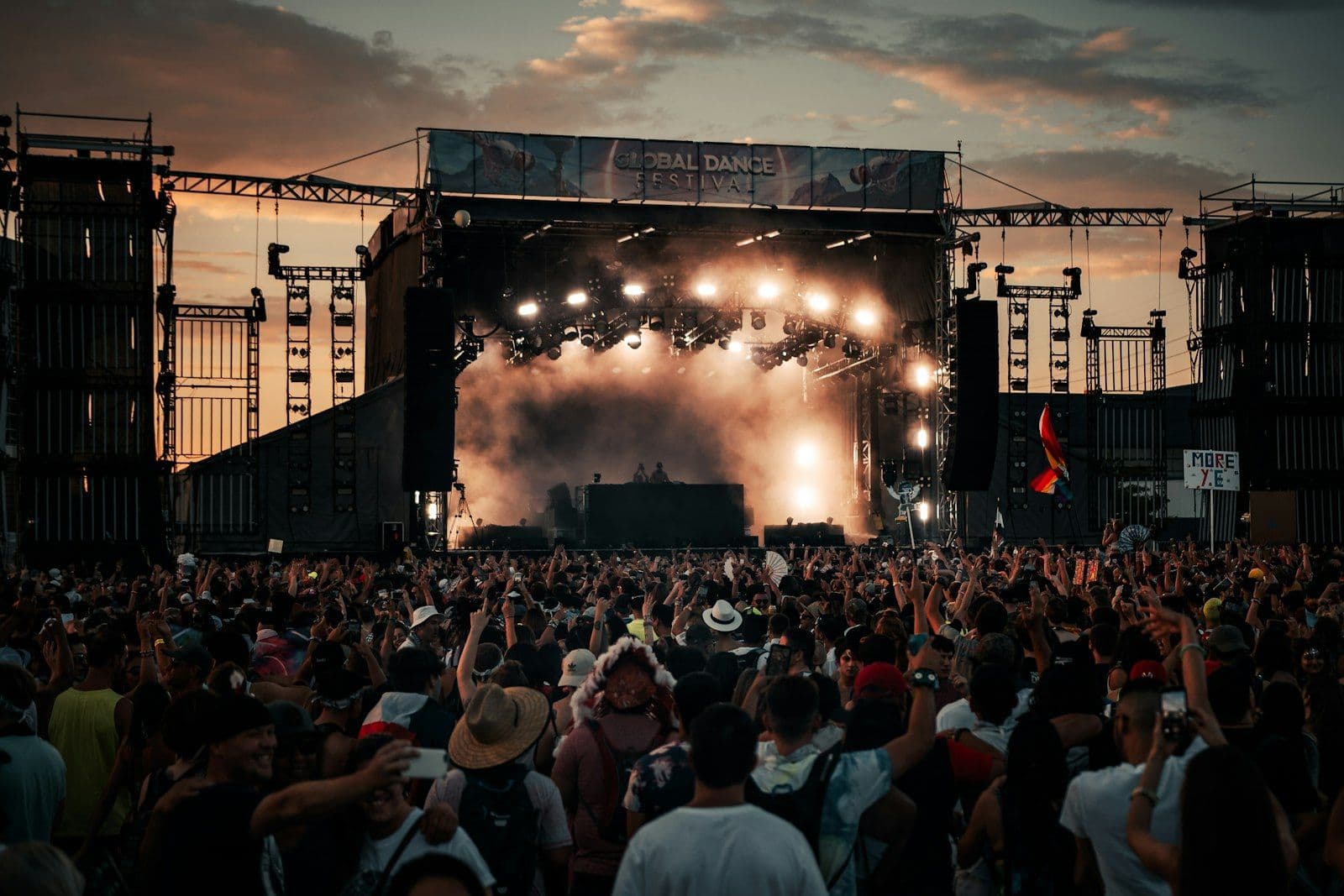
On July 15, Heritage Live cancelled its entire 2026 season: every show at Englefield Estate in Berkshire, Audley End in Essex and Sandringham in Norfolk, with Eric Clapton, Richard Ashcroft and Christina Aguilera on the bills. The promoter did not blame the weather or a headliner dropping out. It said it would be "irresponsible and wrong of us to proceed without the certainty that we'd be able to meet all of our supplier, artist and crew costs" after a last-minute investment package fell through, according to NME and Pollstar.
Supplier costs are the trucks, the staging, the generators, the audio and lighting packages. You commit to all of it before a single ticket scans, which is why a soft on-sale turns into a cancellation instead of a smaller show.
This is not one promoter having a bad year
The Association of Independent Festivals counted its twentieth UK festival cancellation, postponement or fallow year of 2026 back in June, when Womad Glasgow fell. That follows 43 in 2025 and 78 in 2024, per Music Ally and Pollstar. Three years of that is a fixed-cost problem meeting a softer top line.
You will not find real per-truck festival numbers published anywhere, so use the driver side as the anchor. An entertainment driver on tour sits on a day rate starting around $300, roughly $2,100 a week, before the truck, the fuel or the deadhead, and event hauling gets quoted around $1.35 a mile plus a fuel surcharge (ZipRecruiter). Each one is a weekly commitment you make months out. How many of them you sign for is the decision, and you make it on a spreadsheet in February.
Where the multi-act bill actually leaks trucks
A festival puts a dozen different production packages on the same loading dock in one weekend. Leave them alone and every act brings its own backline and its own carts, and you haul four drum kits to a site that needs one.
Shared rigs are old news on the artist side and still underused on the logistics side. Standardize on a five-piece kit, a Twin Reverb and a Marshall stack, an SVT with an 8x10, and let drummers swap breakables only. That is how secondary stages hold changeovers under 30 minutes, and how Montreal's Jazzfest gets a secondary stage under 10. The truck consequence is the part that rarely gets written down: one shared rig is one pack, planned once, that stays on the site all weekend instead of six partial loads cycling in and out.
The same logic scales up. Producers running several festivals off shared vendors, shared marketing and shared full-time staff have put the savings around $110,000, about 7.6 percent of combined budget, versus funding each event on its own (Ticket Fairy). When ticket revenue softens, consolidation is the lever you still control.
What to actually do with a pack
If you are building a festival advance right now, pack the site instead of the acts. Take every rider, strip out what the shared rig already covers, and build one pack per stage from what is left: the acts that will not share a kit, the specials, the video and control packages that are yours anyway. Then look at the cube.
Most bills come out one truck lighter than the sum of the individual advances, and sometimes two. That truck is a driver's week, a fuel bill, a set of site passes and a parking spot you no longer need. Suppliers are the line item that killed Heritage Live's season, so taking one out before you sign beats anything you negotiate afterward.
Then prove it. Show the promoter a pack with the cube filled in and the shared rig loaded once, and the argument about whether the second truck is really necessary ends a lot faster than it does over a stack of riders.
Ready to build your load plan? Log in to Truck Packer and pack it.

