What One More Truck Costs You This Fall
Freight rates are near record highs, the capacity index just hit a 43-month high, diesel jumped 34 cents in a week, and the driver pool is thinning under the new CDL rule. What that actually means when a production manager asks for one more trailer in October.

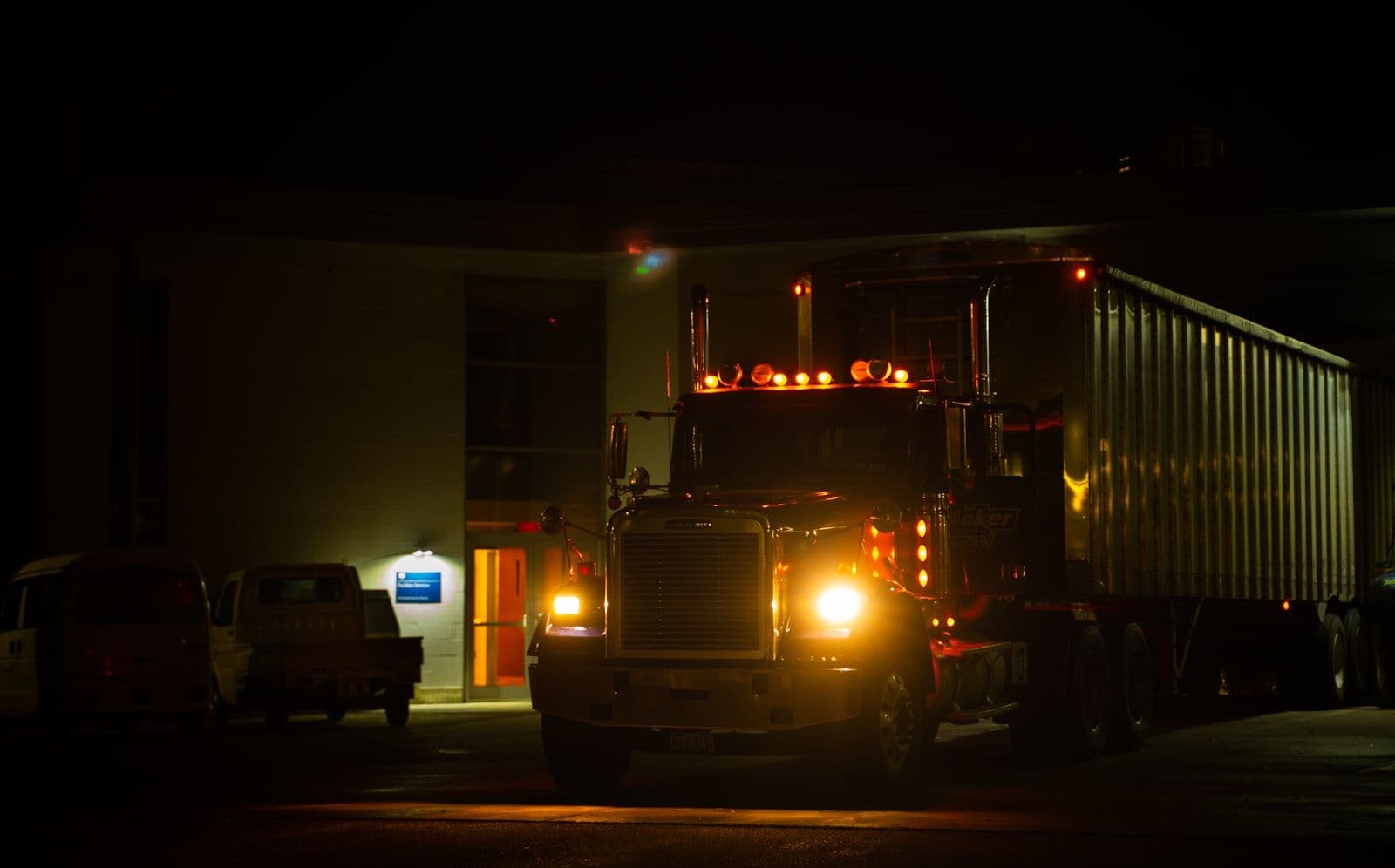
Somewhere in the next few weeks a production manager is going to look at a fall routing, count the gear, and say the words that end the conversation: "let's just add a truck." It has always been the safe answer. It is the one line item nobody gets fired over, and it buys back an hour of load-out and a lot of arguing at the dock.
This fall that answer costs more than it did, and in some markets it may not be available at the price you budgeted. The freight market has quietly swung in favor of the carriers, and touring is a small, seasonal, awkward customer inside a market that no longer has to be flexible for you.
The market moved under you in June
ACT Research's June For-Hire Trucking Index tells the story in three readings. The Freight Rate Index came in at a seasonally adjusted 70.2, down from May's record 79.7, but still among the strongest in the survey's nearly 17-year history. The Capacity Index climbed 1.5 points to 55, its highest level in 43 months. The Driver Availability Index sat at 34.1.
Read those together and you get something specific rather than a general "rates are up." Capacity is expanding, but it is expanding at the big, well-run fleets, while Class 8 sales stay below replacement levels across the rest of the industry. ACT's own read is that market balance has swung decisively in favor of fleets this year, with tight dynamics likely to keep driving rates higher, and it expects capacity gains to accelerate through Q3 and Q4 as spot increases flow into contract rates. Translation for a tour: the trucks that exist are increasingly spoken for on annual contracts, and your one-off October ask is priced against a market that is not desperate for freight.
Fuel is doing its own thing on top of that. The national on-highway diesel average hit $5.134 a gallon for the week ending July 20, a jump of nearly 34 cents in a single week, after bottoming near $4.57 earlier in the month according to EIA's weekly series. A truck you add in August is not carrying August's fuel number through the fall.
The constraint is drivers, not trailers
The part that will actually bite a fall routing is who is allowed to drive. FMCSA's final rule on non-domiciled CDLs took effect March 16 and narrowed eligibility to H-2A, H-2B and E-2 visa holders. FMCSA estimates roughly 200,000 CDL holders operate under non-domiciled status, and about 97 percent of them fall outside those three categories. The early enforcement wave has already removed something on the order of 13,000 drivers from the road, and the rest thin out as licenses expire rather than all at once.
Layer in tighter ELD enforcement and registration-fraud crackdowns and you get the picture the Driver Availability Index is describing. This is not a shortage you solve by finding a better rate. Entertainment carriers pull from the same driver pool as everyone else, and they pull from the narrow slice of it that will sleep on a bus schedule, sit through a nine-hour load-in, and back into a loading dock that was designed in 1974.
What that changes about the decision
The marginal truck used to be a line item. It is now a market-priced, availability-limited resource that you are competing for against contract freight, in a season where retail peak stacks on top of fall touring. That does two things to how the call should get made.
First, the deadline moves up. If you are going to need a fifth trailer for a fall run, that conversation belongs in the routing meeting, not in the week-of production call. Late asks price worst and get filled last.
Second, the trade math changes. An extra truck used to compete against maybe an hour of load-out. Now it competes against fuel over five dollars, a rate environment near record highs, and a real chance the carrier says no for those dates. Which makes the pack itself the cheap lever. Cubing out at 92 percent instead of 78 percent costs nothing. It is a planning problem rather than a purchasing problem, and it is the only variable in this equation that is still entirely yours.
Most tours we see are not truck-limited, they are diagram-limited. Nobody has actually built the load, so the truck count is a guess with a safety margin baked in, and the safety margin is the truck. Build the pack first, then find out whether you need the trailer. This fall, that order of operations is worth real money.
Ready to see if the gear actually fits? Log in to Truck Packer and build the load before you book the truck.

