Nobody Actually Knows If That Was the Best Pack
The industry splits into two camps: production managers who build the truck pack in their head, and people renting a $1,530-a-year CAD suite to draw boxes. Neither one can tell you if the pack they called was the best one available.

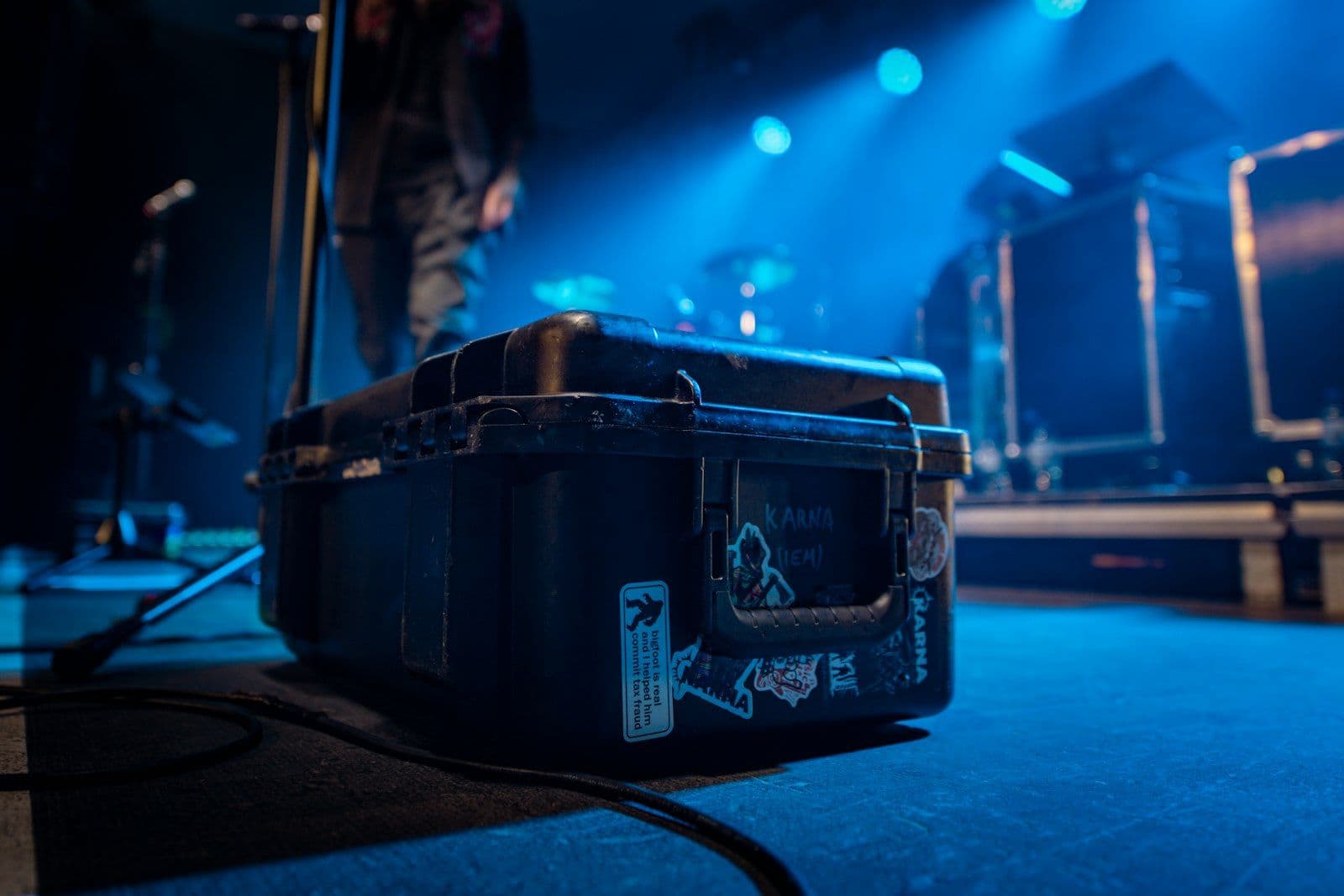
Ask ten production managers how they build a truck pack and you get two answers, not ten. One group builds it in their head. The other group builds it in a piece of software that costs more per year than the truck rental for a short run. Both groups get gear on the road. Neither group can tell you whether the pack they called was the best one available to them.
Camp one: the pack lives in somebody's head
This is most of the industry, and it works better than people outside the business expect. A production manager who has loaded the same rig forty times knows the order, knows which case goes nose-first, knows what the driver will complain about. The Tour Manager trailer pack guide says it plainly: "More experienced stage managers and production managers will often have a good sense of how much gear will fit into a truck and won't necessarily have to create a trailer pack."
When the pack does get planned, it gets planned physically. The same guide recommends taping out the truck footprint on the rehearsal room floor and pushing real road cases around inside it until something works, then printing a laminated schematic so the same pack gets called every night. That is a genuinely good process. It is also a process you run once, in a room you are paying for by the day, with the specific cases you happened to bring to rehearsals.
The problem is not that the eyeball is wrong. The problem is that it has no second opinion. You loaded the truck, the door closed, the run went out. Nobody on the tour ever finds out that a different stack order would have left four feet of usable floor at the back, because there is no version of the night where you tried it the other way. The doubt is quiet and it never resolves, and it gets louder the moment somebody adds a case mid-tour or the carrier swaps a 53-footer for something shorter.
Camp two: renting a design suite to draw boxes
The other camp reaches for CAD, usually because it is already open. Vectorworks Spotlight is the standard in entertainment lighting and stage design, and Vectorworks' own newsroom piece on production management gets around to the truck: "You might even have to figure out how to fit a supplemental lighting package into an existing truck pack," handled through data visualization for truck pack order.
Look at what that costs to use as a load planner. Spotlight lists at $153 a month or $1,530 a year, and the entertainment add-ons stack fast: $1,830 with ConnectCAD, $2,530 with Braceworks, $2,830 with both. Before the subscription switch a perpetual Spotlight seat ran $3,300. There is a third-party plugin, TruckPack from TB-LX, built specifically because the base tool does not do this natively. Its own description gives away the gap it fills: tools "to ascertain whether the required will fit in the available space, but also to work out the easiest and most efficient pack BEFORE you're actually having to load it."
None of that is a knock on Vectorworks. It is superb at the thing it was built for. But if your job that afternoon is to find out whether 41 cases fit in a 53-footer, you are paying for a full lighting and rigging design environment, learning its object model, and drawing rectangles. Lighting designers who already live in the file get real value. The production coordinator who needs one load plan is renting a recording studio to send a voice memo.
What both camps are missing is the same thing
The gap is not drawing. Both camps can produce a picture of a truck. The gap is iteration. A pack you built in your head cannot be A/B tested against a second version. A pack you drew in CAD technically can, but redrawing it costs an hour, so nobody does it twice. In both cases you end up committing to the first arrangement that works and calling it the plan.
That matters because the penalty for a merely-adequate pack is not abstract. It is one more truck on the routing, or the twenty minutes per load-out you spend restacking because the pack was built around the cases you had in rehearsals and not the ones you have in week six. Those are recurring costs on a fixed budget, and they are invisible, because a truck that closed looks exactly like a truck that closed efficiently.
The useful question is not "did it fit." It is "is this the best version of this pack, and can I see the one that isn't." Answering that requires a tool where trying the alternative is cheap enough that you actually try it. That is the whole reason we built Truck Packer instead of writing another CAD template: model the real cases once, then rearrange them in seconds and watch the numbers move. The eyeball is still doing the judging. It just gets something to compare against.
Ready to see the other version of your pack? Log in to Truck Packer and build it both ways.

